
"Closed weight models" are just someone else's datacenter
2026-09-05 / tags: ai, anthropic, google, openai, quick reads, spacexai, technical
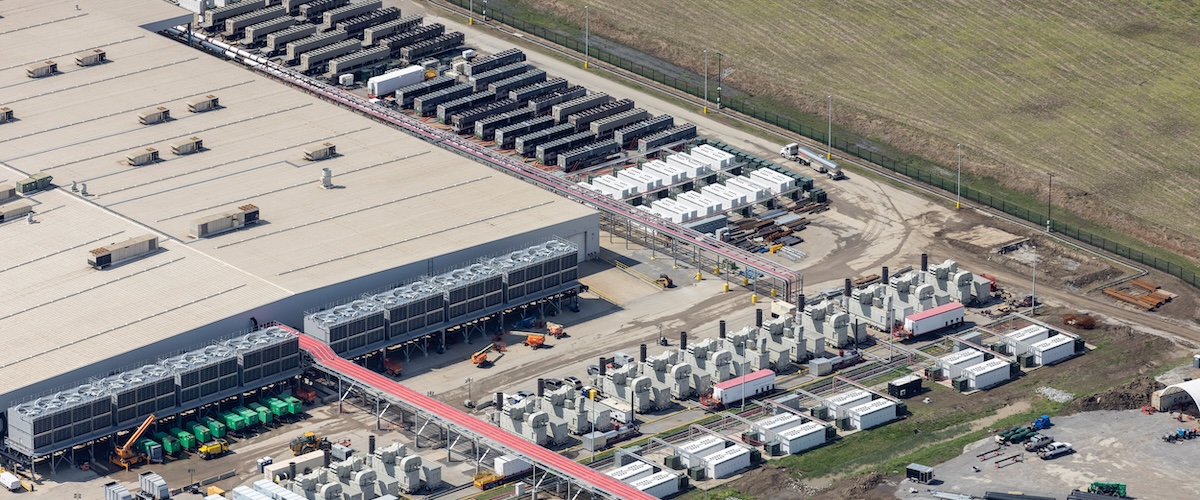
Two days ago, big LLM-as-a-service providers had issues. OpenAI, Anthropic, SpaceXAI[1], and Google[2] all had issues at the same time.
It was later revealed that SpaceXAI's Memphis datacenter experienced an outage (X.com link). This knocked out Grok as well as caused issues for providers that lease compute from SpaceXAI, namely Anthropic and Google. Notably, OpenAI also uses Google infrastructure, though it's unclear if their outage was because compute they get from Google includes some of what Google gets from SpaceXAI. Another possibility: as providers hit the floor, end users and harnesses[3] switched to their next preference, immediately shifting demand to their next provider of choice and overloading it.
The result? Much of the demand for LLMs-as-a-service that these companies have spent years cultivating had nowhere to go for agonizing hours, laying bare a fundamental – and fundamentally dangerous – assumption that organizations and individuals reliant on them have frequently made: that these services can be depended on for consistent availability.
Even if you set aside the incredibly unstable and shaky financial foundations of these services, which do pose them existential risk, the fact of the matter is that these APIs are not exactly renowned for their reliability – or cost stability. Years ago I read an article from an entrepreneur who had built a business on the back of someone else's business, and that other business decided to switch things up somehow, destroying the former. Whether it's pulling free APIs, shutting down entirely, or integrating your product themselves, other parties make moves you might not like all the time. A sustainable business is not overly reliant on external sources for data, services, or other needed resources that can't be gotten elsewhere.
If enough AI datacenters irreversibly stopped working tomorrow, you or I might be fine, but a gargantuan number of software shops would be incapacitated. As coding agents like OpenAI Codex and Claude Code have proliferated and made writing software quicker and less repetitive, businesses have adopted them at breakneck pace to keep up with their customers' demands and stay ahead of the competition. Usually, the traditional emphasis on time-to-market does not make room for concerns like "OpenAI might jack their prices" or "communities are uniting against datacenters and digging in their heels in fights to stop construction".
Earlier in the year, I saw an interesting development where individual techies, with their decidedly shallower pockets compared to VC-funded startups, got ahead of the curve on sustainability: they bought out all Mac Mini stock to run an application called OpenClaw, an AI agent that was often given irresponsible amounts of access to resources by tantalized users. Now, I encourage being very careful about sandboxing and monitoring with agentic systems, and I don't think LLMs are a one-size-fits-all solution for "intelligence" problems, but there are good uses for the tech. If you're going to run an AI model, running it on hardware that you own and can pay the costs of maintenance, electricity, and networking for is probably the best way to do it, no matter the scale. This setup is less like stashing thousands of dollars under the mattress instead of a checking account, and more like assembling a desktop from parts yourself instead of buying a prebuilt machine: you get all the cost savings and skills, and when things go wrong, you have the agency (and, hopefully, the capability) to fix them yourself. You're never relying on a set of nearly entirely unregulated tech companies to fix your rig's Wi-Fi not working – no more two hour long calls to ASUS. Doesn't that sound wonderful?
The snag with assembling your own desktop is that it requires a level of technical acumen that not everyone has, but lots of people need to use desktop computers. Software engineers already have that acumen[4] – in most cases, this move isn't gated behind learning a totally new set of skills. Hardware may cost money, as it always has, but Ollama is free. You know what isn't free? LLM APIs – and engineer salaries for the time those are down.
-
Sigh. I know that naming things is the hardest problem in computer science, but… they could’ve at least tried. ↩
-
Google has no specific status page for Gemini, but third party sites like DownDetector or StatusGator noted this outage. ↩
-
Harnesses are programs that manage how LLMs are used. One of their main capabilities is dynamically switching what model they're using, which they might do for various reasons, including reducing costs by using a cheaper model for a simpler task, or trying a different model when one is not responding to requests, as I hypothesize happened en masse yesterday. ↩
-
Well... hopefully. I think some may get a rude awakening when the dynamics of LLM usage change enough to move costs wildly higher and realize how reliant they are on tech that's no longer in reach. ↩